
Conceptual differences
Client and account structure
Current solution:
- Accounts are separate and not connected.
ComplyAdvantage Mesh:
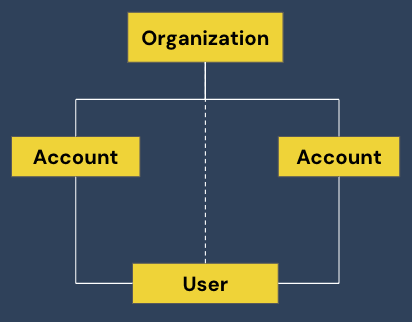
- A client can have multiple accounts that follow a parent-child structure; for example one account can represent a distinct business line in a company (e.g., loans vs. savings) or different environments (sandbox vs. production).
- Users are linked to an organization and can be assigned to one or more accounts.
Unique external identifiers
Current solution:
- external_refs (client_ref) do not need to be included when onboarding a customer and do not need to be unique.
ComplyAdvantage Mesh:
- external_identifiers need to be included when onboarding a customer and must be unique.
Screening configurations
Current solution:
- Fuzziness is applied outside of the screening configuration as another setting.
ComplyAdvantage Mesh:
- Fuzziness is part of the screening configuration.
Fuzziness
Current solution:
- A search cannot have more than one fuzziness level.
ComplyAdvantage Mesh:
- A single search can have multiple fuzziness levels depending on the collection.
Risk scoring
Current solution:
- Risk scoring is not dynamic; must be set manually by the customer post screen and is a subjective analysis of the customer.
ComplyAdvantage Mesh:
- Fully configurable, automated customer risk model that calculates a customer’s risk score based on the attributes and weighting assigned by the client. It is updated dynamically as alerts are decisioned.